You don’t have to take this journey alone. Support is available. Whether you need immediate assistance or guidance to plan for the future, there are resources available for you.
Support, Resources, and Hope for Survivors of Domestic Violence
Survivors of domestic violence often face an overwhelming array of challenges as they navigate the aftermath of their experiences. However, support, resources, and hope are crucial elements that can empower them on their journey to healing. From shelters and counseling services to legal assistance and community programs, a wealth of resources is available to help survivors reclaim their lives and foster resilience. By connecting with supportive networks and accessing the right tools, survivors can find hope and rebuild their futures, transforming their pain into strength.
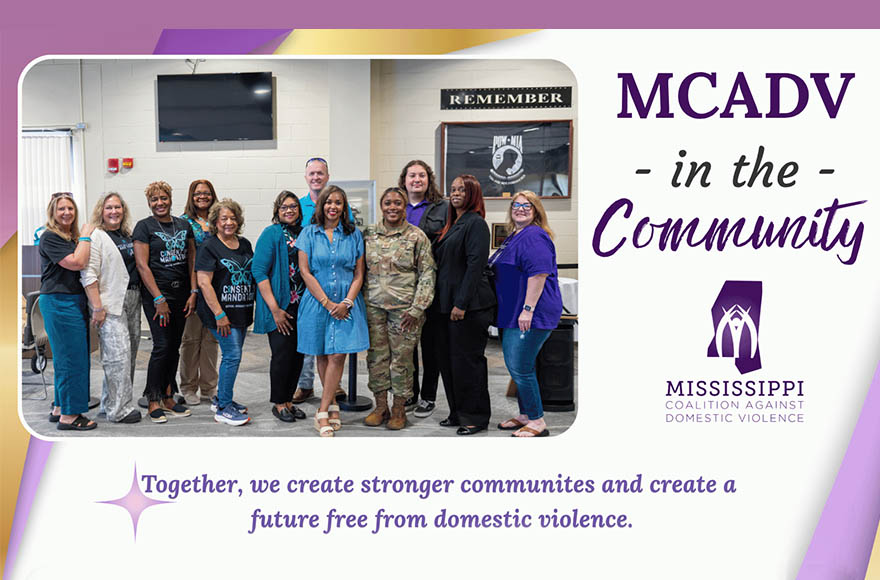
The Mississippi Coalition Against Domestic Violence (MCADV), founded in 1980 by survivors and advocates, is dedicated to supporting those affected by domestic violence.
MCADV equips hundreds of advocates, law enforcement officers, and various domestic violence professionals through both virtual and in-person training, providing them with the essential knowledge and skills to effectively support survivors and their families.
Domestic Abuse Family Shelter (Laurel, MS) Crisis Line: 1-800-649-1092 dafs.ms
10
Gulf Coast Center for Nonviolence (Biloxi, MS) 10 Jane’s House – Biloxi Crisis Line: 1-800-800-1396 Adrienne’s House – Pascagoula Crisis Line: 228-762-8267 gccfn.org/wordpress
MCADV Events Coming Up
MCADV is dedicated to building safer communities and we invite you to participate in our upcoming events. From workshops to community engagement initiatives, there’s an opportunity for everyone to get involved. Explore our event calendar and discover how you can help create meaningful change!
Resources
MCADV provides resources to empower individuals and communities affected by domestic violence. Below, you’ll find essential tools, information, and support services for survivors, their families, and advocates. Whether you need guidance on safety planning, or emotional support, our resources are here to help you navigate the complexities of domestic violence.
PROGRAMS
TEEN ADVISORY COUNCIL
POLICY & ADVOCACY
INSIDE TRAC
HELP
MS SHELTERS
WHAT IS DOMESTIC VIOLENCE
MEN & DOMESTIC VIOLENCE
ABOUT MCADV
MISSION AND HISTORY
SERVICES
OUR STAFF
RESOURCES
TRAINING
REQUEST FORMS
Join the INside TRAC
Becoming a part of the INside TRAC allows you to deepen your commitment to serving victims and survivors of domestic violence. Our membership structure offers multiple levels designed to meet specific needs. Each level provides various benefits, including specialized training for family violence programs, resources for community organizations, and first-hand access to public policy alerts. Complete the form to get more information about joining INside TRAC!